
Entering Swedish Market – Julia Erikson gives her insights as a Local Marketer.
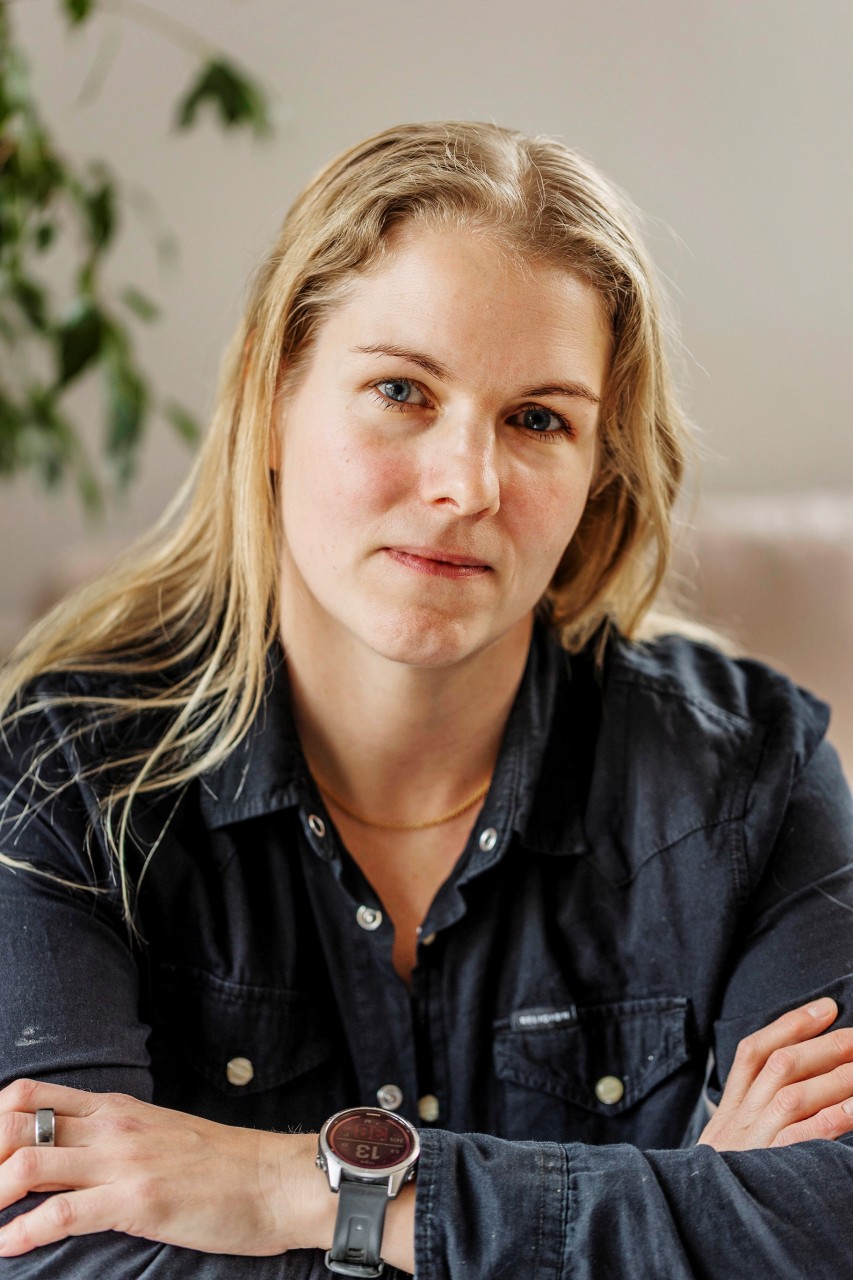
Meet Julia Erikson, who supports energy and tech CEOs in building bold positioning and marketing strategy aligned with their billion-dollar growth ambitions.
Julia about herself and specifics of her industry:
most energy and tech companies are changing the world – but the market doesn’t fully understand what they do, why it matters, or in some cases, that they even exist.
With a background in engineering and more than a decade inside B2B energy and tech, I saw the same pattern repeatedly: agencies delivered reports – but not results. Strategy stayed on slides. Teams were left to fix the messaging themselves.
I step in to bridge that gap between business goals and marketing action – aligning positioning, priorities, and execution so marketing actually moves the business forward.
Most energy and tech companies are changing the world – but the market doesn’t fully understand what they do, why it matters, or in some cases, that they even exist.
Katarzyna Sarba: Julia, we know each other from the time when we work together in a global company, introducing it to the local markets: you in Sweden and Finland, me in Poland. Let’s start quite broadly: what are the main challenges that foreign companies usually face when entering the Swedish market?
Julia Erikson: the most common hurdle is understanding how things work, both in terms of formal rules like laws and regulations, and the the unwritten ones around how business is actually done.
How do you run a sales meeting in Sweden? What’s considered direct and efficient in one culture can come across as rude here. And what reads as enthusiastic and confident in an American context can feel braggy and pushy to a Swede.
I saw this firsthand working with a global company you mentioned entering the Swedish market. The way they presented themselves, their tone, their pace, all of it needed adjusting. Not because the marketing was bad, but because the packaging didn’t match how Swedes expect to be talked to.
And this is what makes Sweden particularly tricky. Because Swedes speak English so well, foreign companies assume they understand us. They don’t. Good English skills don’t erase cultural expectations, they just make them less visible.
Katarzyna Sarba: What defines the Swedish consumer – what makes their purchasing behavior and brand expectations unique? Could you split these between B2C and B2B clients?
Julia Erikson: In B2C we trust a lot in our friends and family and what others have recommended. In B2B we like to be more data-driven, at least that’s what we like to believe. In the end we’re all humans and relationships are important across the spectrum. As some like to put it, H2H – Human-to-Human, is the only way we sell.
One thing that really stands out about Swedish consumers – in both B2C and B2B – is how quickly they spot when someone is overselling. We don’t respond well to hype. Substance and honesty beat enthusiasm every time. If your messaging feels exaggerated, you’ve already lost us.
In B2B, “data-driven” is also only part of the picture. Swedish business culture runs on consensus; decisions need broad internal buy-in, and nobody wants to be the one who pushed something their colleagues didn’t back. It makes sales cycles longer, but when you’re in, you’re really in.
There’s also something interesting about how Swedes relate to price. We don’t shop consistently “up” or “down”, we make very deliberate choices about where something is worth spending more, and where it isn’t. The same person might have a Tesla on the driveway and buy their clothes on Vinted.
In B2B it’s no different, a company might invest in a premium solution without blinking, and negotiate hard on something else the same week. Price alone is rarely a winning argument. You need to make a clear case for why your specific offer deserves to be in the “worth it” category.
I would say Swedes are in general quite interested in environment and sustainability, compared to many other countries, and we have a lot of laws and regulations which makes those questions important in a purchase decision (even though the EU in general has evolved a lot in regards to those questions in the last years). And while sustainability matters, the bar for credibility has never been higher. We know enough now to spot greenwashing, broad claims don’t cut it anymore, you need to show your work.
Katarzyna Sarba: How important is localizing marketing communication – in terms of language, tone, and brand values – to connect with Swedish audiences?
Julia Erikson: I would say it’s very important! It’s easy to spot when ads are run “straight off the shelf” and they seldom work very well.
When I work with clients I rarely translate a text “word by word”, you need to change how the sentences are constructed. And often reorganize, add, or remove parts of a sentence or a section to make it feel authentic.
Often there are parts of the content that would do much better if it’s localized. I once was marketing manager for a company working with different types of houses, and it’s very easy to spot if a house is from Sweden or not if you don’t think twice about the type of house you select for ads, websites or other forms of communication. And it’s always easier to sell if you feel local – no matter if it’s Sweden or Japan.
Katarzyna Sarba: Which marketing strategies tend to perform best in Sweden – digital channels, influencer collaborations, content marketing, or traditional B2B networking?
Julia Erikson: Well I have to be pragmatic on this one. Of course it depends. But if I just have to highlight one I would definitely go digital. Sweden is a very digital country and most companies try to save cost and increase data and follow up possibilities by selecting digital channels.
But in B2B old fashioned sales visits are still very, very common – especially if you’re selling complex solutions. You might expect everything to have moved online, but when the decision is complex and the investment significant, Swedes still want to meet in person (or at least on Teams). The bigger the deal, the more time, trust and dialogue it requires. Digital gets you in the door – but relationships get you the deal.
Katarzyna Sarba: What are some common mistakes foreign brands make when launching their products or services in Sweden?
Julia Erikson: Expecting that as Swedes understand English so well – we can just run our UK/American campaigns as is. It doesn’t work well. There are actually two mistakes hiding in that assumption.
The first is language. Even if Swedes understand English, communicating in Swedish signals that you’ve made an effort to show up locally. It builds trust from the start. But if you do communicate in English, you still need to adapt the tone. Swedish English is more stripped back, less salesy and far less superlative-heavy than American or British marketing copy. Swedes read “the ultimate solution” and raise an eyebrow.
The second, and bigger, mistake is assuming that understanding the language means understanding the culture. It doesn’t. You have to understand how Swedes actually live and work, and tailor your message accordingly.
An example: it would be a bad idea to market a “school-lunch snack for kids” in Sweden. School lunches are already included for all kids, so it should rather be positioned as a “before your afternoon ice hockey practice snack.” Same product, completely different message.
In B2B the equivalent mistake is coming in too pushy. Swedes need time to build trust and reach consensus internally. If you push too hard or follow up too aggressively, it comes across as desperate rather than confident, and you risk losing the deal rather than closing it.
Katarzyna Sarba: Are there particular industries in Sweden that are especially open to international brands, or sectors that are more difficult to enter?
Julia Erikson: One sector worth highlighting for international brands is the Swedish public sector. Sweden has a well-developed public procurement system governed by strict regulations (LOU — Lag om offentlig upphandling). If you want to sell to municipalities, regions or government agencies, you need to understand how that process works. It’s not impossible for international brands, but it requires patience, local knowledge and ideally some Swedish references already in place.
Katarzyna Sarba: How important is trust and transparency when building relationships with Swedish customers?
Julia Erikson: Extremely important. Swedes want to understand what they are buying and from whom – and we don’t respond well to feeling misled. Transparency isn’t just a nice-to-have, it’s a baseline expectation. And reputation travels fast in a small, well-connected market like Sweden. If you lose someone’s trust, you’re likely not just losing one customer – we switch, and we tell others.
This is also why heavy sales tactics don’t work well here. Swedes don’t trust them – and if you don’t build trust, you don’t build a relationship. And without a relationship, you don’t get the deal.
Katarzyna Sarba: If you could give one piece of advice to a company planning to expand into Sweden, what would it be?
Julia Erikson: Get local help, whether that’s a partner, an advisor, or a consultant who knows the market. Just having someone to ask about culture, wording or how things are done will save you many hours of trial and error.
AI translations and generic market research only get you so far. Building relationships and trust still comes down to the details, and the details require truly understanding the market you’re entering.
Katarzyna Sarba: Many thanks, Julia for taking the time to share your experience and valuable insights about the market and business. And it was a great fun to meet you again and have this conversation.
To all my readers: If you are looking for a business partner who will support you in entering into Sweden – feel free to contact Julia Erikson via her LinkedIn!